

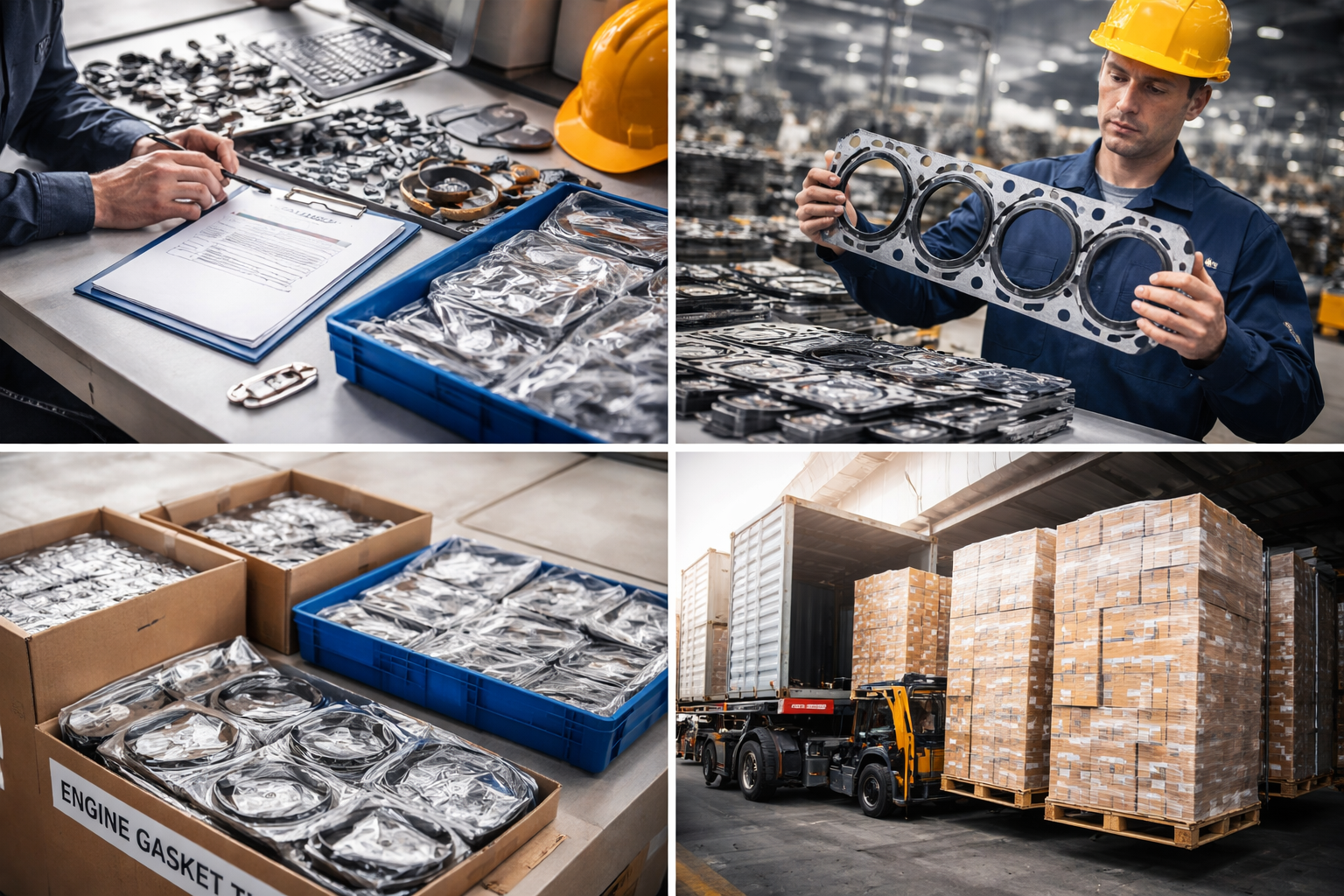
Why Engine Gasket Kits Are Not an Afterthought in Diesel Engine Performance
Most people who manage diesel-powered fleets or workshops know what happens when a head gasket fails. The engine overheats, coolant mixes with oil, and what started as a small sealing issue turns into a full engine overhaul. Gasket kits are not flashy components. No one puts them on a specification sheet when buying a generator or an excavator. But once they fail, every other component on the engine becomes a secondary concern.
Engine gasket kits and seals do several jobs at once. They maintain combustion compression inside the cylinder, control oil flow through the engine block, keep coolant circuits sealed and separate, and preserve turbo pressure in turbocharged diesel systems. Lose any one of these, and the engine does not just underperform. It degrades fast.
This matters especially in India’s construction, marine, logistics, and power generation sectors. Diesel engines running excavators on highway projects, generator sets at industrial sites, and marine engines at ports are expected to work long hours in tough conditions. The demand for reliable engine gasket kit manufacturers in India has grown steadily over the past decade, and that growth is not slowing down.
For bulk buyers, particularly procurement teams for fleet operators, workshops, and OEM distributors, the instinct to go with the cheapest supplier is understandable. But it is usually the wrong call. The cost of a bad gasket set is not just the price of a replacement. It is engine downtime, labour charges, and in commercial settings, delayed project timelines. Quality, precision, and durability need to come before price. Not alongside it.
The Different Types of Engine Gasket Kits and What They Actually Do
The term “gasket kit” covers a wide range of products. Bulk buyers need to know the difference because ordering the wrong kit for an engine type or repair job wastes money and time. Here is a breakdown of the main categories.
Full Engine Gasket Sets (Engine Overhaul Kits)
These are used during a complete engine rebuild. A full set includes the head gasket, sump gasket, crankshaft seals, valve stem seals, O-rings, and all the sealing components required to reassemble the engine properly. Diesel engine gasket kits in Mumbai and across India from reliable full engine gasket set suppliers are mostly sold to engine rebuilding workshops handling construction equipment, generators, and heavy transport vehicles. If the engine is coming completely apart, this is the kit to specify.
Top Gasket Kits
These cover the cylinder head area. Included components are the head gasket, valve cover gasket, and intake and exhaust manifold gaskets. Used when the repair is limited to the top end of the engine, such as after a head gasket failure without damage to the lower block.
Front and Rear Gasket Kits
These focus on the crankshaft sealing areas at the front and rear of the engine. The primary job is preventing oil leakage from the main seals. Front and rear seal failures are among the more common oil leak sources in high-mileage diesel engines.
Central and Lower Gasket Kits
Used during partial disassembly where the lower block needs attention. Covers oil sump gaskets and lower block sealing components. These kits are useful when a workshop is addressing oil pan leaks or doing partial engine work without a full overhaul.
Single Cylinder Head Kits
Designed for situations where only one cylinder is being addressed. These are more economical than a full top gasket set and make sense for targeted repairs on multi-cylinder engines where damage is isolated.
Aftercooler and Lines Kits
Turbocharged diesel engines use aftercoolers to reduce the temperature of compressed air before it enters the combustion chamber. Sealing failures in this system reduce air pressure efficiency and hurt engine performance noticeably. These kits are important for heavy equipment running turbocharged diesel engines. A turbocharger gasket kit supplier in Mumbai supplying these for construction and marine applications needs to meet tight dimensional tolerances.
Water Pump Repair and Installation Kits
Coolant leaks are a common problem in Indian operating conditions, where ambient temperatures run high and engines often work long hours without adequate cooldown periods. Water pump kits include all the seals and gaskets needed to repair or install the pump correctly. These are not optional for engines in hot and dusty environments.
Oil Cooler and Oil Pump Kits
These protect the lubrication system. An oil cooler seal failure can lead to oil contamination or a drop in oil pressure. Either outcome shortens engine life fast. Oil pump kits ensure the lubrication system stays sealed and delivers consistent pressure.
Single Unit Injector Kits
Modern diesel engines use unit injectors that require their own sealing components. A failed injector seal affects combustion pressure and fuel delivery accuracy. These kits handle the sealing around individual injectors.
Turbocharger Installation Kits
When a turbocharger is being replaced or reinstalled, this kit provides the gaskets and seals needed to complete the job without exhaust gas leakage. A turbocharger installation done without proper sealing components tends to develop leaks quickly, especially under the thermal cycling that turbos experience.
Head Gaskets
The head gasket alone deserves mention because it is probably the most critical single sealing component in a diesel engine. It seals the combustion chamber against the cylinder head and must handle extreme pressure and temperature on every engine cycle. Heavy-duty diesel engines put more stress on head gaskets than most other applications. Material selection here is not something to compromise on.
Front and Rear Crankshaft Seals
These prevent engine oil from leaking around the crankshaft at either end of the engine. A crankshaft seal manufacturer in India supplying these for heavy-duty diesel applications needs to produce seals that can handle the rotational speed, heat, and oil exposure that commercial diesel engines generate over long hours.
Oil Sump Gaskets, O-Rings and Seals
Small components, but the source of a large proportion of oil leak complaints. An oil sump gasket supplier in Mumbai serving workshops knows that a failed sump gasket leads to slow oil loss that often goes unnoticed until the engine is already running low. O-rings throughout the engine serve similar functions in preventing leaks at joints and fittings.
Materials Used in Engine Gasket Manufacturing and Why They Matter
A gasket is only as good as the material it is made from. In high-performance diesel engines, cheap materials do not last, and the cost of replacement far exceeds any savings made on the original component.
Multi-Layer Steel (MLS) Technology
MLS head gaskets are the current standard for high-compression diesel engines. These gaskets consist of multiple layers of steel, typically with a rubber or elastomer coating on the sealing surfaces. The layered construction allows the gasket to conform to minor surface imperfections on the head and block while maintaining a tight seal under high combustion pressure. MLS head gasket manufacturers in India supplying for commercial diesel applications need precision manufacturing to get the layer thickness and coating right. A poorly made MLS gasket delaminates or fails to seal properly under pressure.
Graphite Composite Materials
Graphite is used in gaskets where heat resistance is the primary concern. It handles high temperatures well and does not degrade or harden the way some softer materials do under prolonged heat exposure. Graphite composite gaskets are common in exhaust manifold applications and in areas close to the combustion chamber.
Nitrile Rubber (NBR) and Viton Seals
NBR is the standard material for oil-resistant seals. It handles engine oil, diesel fuel, and moderate temperature ranges reliably. Viton (fluoroelastomer) is used where NBR falls short, particularly in high-temperature applications or where the seal is exposed to synthetic oils or aggressive fluids. Heavy-duty engine seals in Mumbai and across India for commercial diesel applications are increasingly specified in Viton where service conditions are demanding.
High-Temperature Silicone Sealing Rings
Silicone compounds are used in sealing rings for applications involving high heat and thermal cycling. They stay flexible over a wide temperature range and do not harden and crack the way standard rubber does after long exposure to heat.
Corrosion-Resistant Coatings
Many gasket components for the Indian market receive additional corrosion-resistant coatings. Engines operating in coastal areas, high-humidity environments, or near industrial sites see accelerated corrosion on metal gasket components. A coating that prevents surface rust maintains the sealing integrity of the gasket over its full service life.
The operating environment in India pushes these materials harder than in many other markets. High ambient temperatures, dusty conditions on construction and mining sites, long operational hours without extended shutdown periods, and in many cases limited access to premium lubricants all stress gasket materials. Industrial gasket manufacturers in India supplying for these conditions need to specify and verify materials accordingly, not just label a product as “heavy-duty.”
What Actually Goes Wrong When Gasket Kits Are Poor Quality
The failures are predictable. They are also expensive.
Head Gasket Blow
A head gasket made from substandard material or with incorrect layer thickness will not seal consistently under combustion pressure. As the gasket weakens, combustion gases escape into the coolant or oil passages. The engine overheats, coolant boils, and in many cases the cylinder head warps. By the time the problem is diagnosed, the repair cost is several times what a quality gasket kit would have cost originally.
Oil Leakage from Crankshaft Seals
A crankshaft seal that hardens, cracks, or was dimensionally incorrect to begin with starts leaking oil steadily. The engine loses oil slowly. If the drop in oil level is not caught quickly enough, the engine runs low on lubrication and bearing wear accelerates. Diesel engine gasket failure in Mumbai and other high-usage commercial environments often traces back to seal materials that were never suited to the operating temperature range.
Coolant Mixing with Engine Oil
This happens when a head gasket or oil cooler seal fails and allows coolant to cross into the oil circuit. The result is a milky, contaminated oil that does not lubricate properly. Bearings suffer. In severe cases the engine is written off. Catching this early requires regular oil checks. Avoiding it requires a gasket that was made to specification from the start.
Turbo Pressure Drop
A failed aftercooler or turbocharger installation gasket allows compressed air to escape before it reaches the combustion chamber. The turbo works harder to compensate, boost pressure drops, and fuel efficiency falls. In engines running heavy loads, this shows up as black smoke and sluggish response. The fix seems simple until you look at the labour time involved in removing and resealing the turbo system.
Oil Sump Leakage
A failed sump gasket drips oil onto the ground. Most operators spot this eventually, but not always before the oil level has dropped enough to cause damage. Sump gaskets made from materials that compress unevenly or degrade quickly under oil contact are a common source of nuisance leaks in workshops.
Injector Compression Loss
A poorly sealed injector allows combustion pressure to escape at the injector bore. The engine loses power on that cylinder, fuel combustion becomes inefficient, and over time the injector and surrounding metal surfaces suffer additional wear.
The financial impact of these failures in commercial operations is real. Engine downtime on a construction site or at a power plant is not just an inconvenience. Every day a generator set is offline or an excavator is in the workshop is a day of lost productivity. The heavy equipment gasket replacement cost in India is manageable if done proactively with quality parts. Done as an emergency repair after engine damage, the cost is significantly higher.
Manufacturing Standards and Quality Control for Engine Gaskets
A reliable engine gasket manufacturer in Mumbai or anywhere in India needs to follow a consistent production and quality process. Buyers doing bulk procurement should know what to ask about.
Precision Die Cutting
Gasket blanks cut from sheet material need accurate dimensions. A die that is worn or imprecisely made produces gaskets that do not align correctly with bolt holes or sealing surfaces. Misaligned gaskets fail quickly.
Thickness Control
Head gaskets in particular need consistent thickness across the entire component. A variation of even a fraction of a millimeter across the gasket surface creates uneven clamping pressure. This leads to localized leakage and eventual failure.
Pressure Testing
Finished gasket kits from a certified gasket manufacturer in Mumbai should be verified through pressure testing protocols. This confirms that the sealing components hold under the conditions they will face in service.
Heat Resistance Testing
High-temperature components including head gaskets, exhaust manifold gaskets, and turbocharger installation gaskets should be tested at the temperatures they will encounter. Material that looks adequate at room temperature can degrade significantly at engine operating temperatures.
Dimensional Accuracy Checks
Every gasket in a kit needs to be checked against the original equipment specifications. Engine models have specific tolerances, and a gasket that is even slightly out of spec may cause sealing issues.
Batch Inspection System
Reliable suppliers do not test one unit and assume the rest of a production batch is acceptable. A proper batch inspection process with defined sample sizes and rejection criteria is what separates a tested engine gasket kit supplier in India from one that just ships whatever comes off the production line.
For export buyers in the UAE and Africa sourcing engine gasket exporters in India, these standards also affect compliance with import requirements. Quality documentation, batch traceability, and material certifications are expected in most export markets. A supplier without these systems in place creates problems for buyers at the destination end.
Supply Chain and Bulk Production Capacity
Knowing that a manufacturer produces quality gasket kits is only part of the evaluation for a bulk buyer. The supply side has to work as well.
A bulk engine gasket kits supplier in Mumbai or elsewhere in India needs to demonstrate stable production capacity. Suppliers who work fine for small orders often run into lead time problems when a buyer places a large bulk order. Before committing to a supplier, procurement teams should ask about maximum monthly production capacity and how that compares to the volumes being ordered.
Bulk order handling as a process matters separately from production capacity. A supplier needs the warehouse space, packing operations, and logistics coordination to handle large orders without errors. Mislabelled kits, incomplete sets, or orders that ship in multiple fragmented deliveries create problems at the buyer’s end.
Fast dispatch across India is necessary for buyers serving workshops in multiple cities. A wholesale diesel engine parts supplier based in Mumbai with good logistics connections can typically reach most major Indian cities within two to three days for standard freight. Buyers should confirm this before setting expectations with their own customers.
For export orders, proximity to Mumbai port is a practical advantage. An engine gasket exporter in Mumbai with experience in export documentation, container loading, and customs compliance can move shipments more reliably than a supplier doing their first export order.
Consistent stock availability is the final point. A supplier who regularly runs out of key kit variants forces buyers to source elsewhere at short notice, which usually means paying more. Reliable wholesale suppliers maintain buffer stock of their fast-moving lines so buyers do not face gaps.
Why Shah Trade Corporation Is a Reliable Choice for Bulk Engine Gasket Procurement
Shah Trade Corporation is a bulk engine gasket kit supplier in Mumbai, India, with a complete range of gasket kits and sealing components for diesel engines and heavy equipment.
Their product range includes:
- Full Engine Gasket Sets (Overhaul Kits)
- Top, Front, Rear, Central and Lower Gasket Kits
- Single Cylinder Head Kits
- Aftercooler and Lines Kits
- Water Pump Repair and Installation Kits
- Oil Cooler and Oil Pump Kits
- Single Unit Injector Kits
- Turbocharger Installation Kits
- Head Gaskets
- Front and Rear Crankshaft Seals
- Oil Sump Gaskets
- O-Rings and Engine Seals
Having this range under one roof matters for bulk buyers. Sourcing different kit types from multiple suppliers increases coordination complexity, leads to inconsistent quality across components, and creates logistical headaches when orders arrive incomplete or at different times.
Shah Trade Corporation serves diesel engine applications across construction equipment, generators, marine engines, and heavy vehicles. Their pricing is structured for wholesale and bulk purchase, and their supply chain is set up to handle consistent large-volume orders from Mumbai. For buyers looking at an engine gasket kit supplier in India for domestic or export distribution, they offer a reliable supply base with the product depth to cover most diesel engine servicing requirements.
A Practical Checklist Before Finalising a Bulk Purchase
Before committing to a gasket kit supplier for bulk orders, work through these points:
Verify material grade. Confirm that head gaskets are MLS construction, that seals are specified in NBR or Viton as appropriate for the application, and that graphite or high-temperature materials are used where heat resistance is required. Do not accept vague assurances. Ask for material data sheets.
Confirm engine model compatibility. Gasket kits are not universal. The supplier needs to confirm that the kit supplied matches the specific engine make and model being serviced. A kit that is close but not correct will cause problems.
Check testing standards. Ask what quality control processes are in place. Pressure testing, dimensional checks, and batch inspection should be standard, not optional extras.
Compare bulk pricing with total cost in mind. The price per kit is one number. Factor in quality, reliability, and the cost of a failed gasket before deciding the cheapest option is the best option.
Evaluate the long-term supplier relationship. A supplier who can grow with your volumes, maintain consistent quality, and communicate reliably about lead times is worth more than one who gives a slightly lower quote on the first order.
Confirm export documentation if shipping internationally. For buyers exporting to the UAE, Africa, or other markets, confirm that the supplier can provide certificates of origin, material certifications, and packing lists that meet the destination country’s import requirements. An engine gasket exporter in India with established export processes will handle this without it becoming a problem on every shipment.
For bulk enquiries on engine gasket kits and diesel engine sealing components, Shah Trade Corporation supplies from Mumbai, India to domestic and international buyers.