

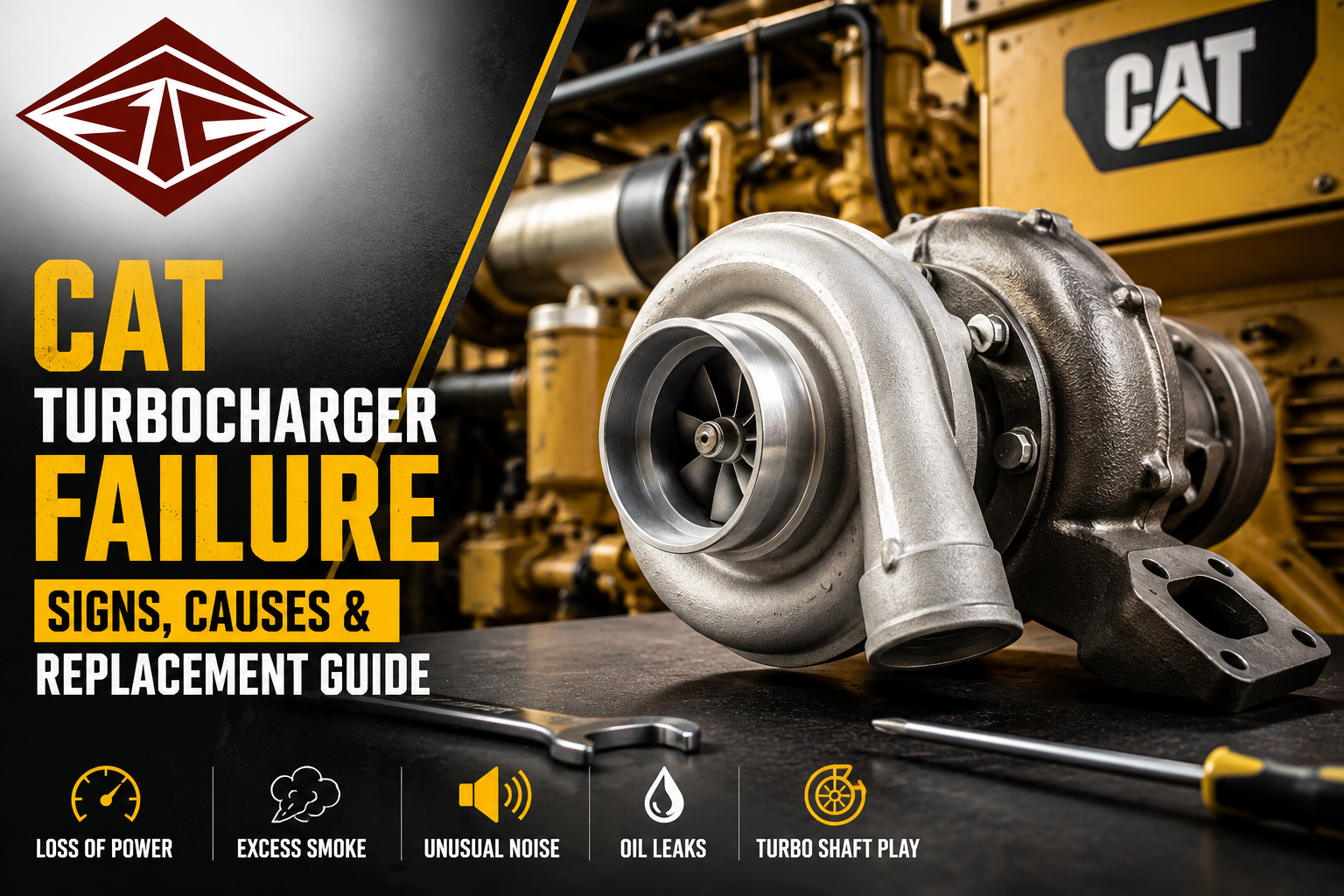
If your CAT machine has suddenly lost power, is smoking more than usual, or is making a whining noise it never made before, the turbocharger is usually the first thing people blame. Sometimes that’s the right call. Sometimes it isn’t, and swapping a perfectly good turbo doesn’t fix anything because the real problem was sitting somewhere else in the engine the whole time.
This guide covers the actual warning signs of CAT turbocharger failure, what causes it in the first place, how to tell a real turbo problem from something that only looks like one, and what to check before you spend money on a CAT turbocharger replacement. Whether you’re running excavators in a mining fleet, generators on a job site, or engines on a marine vessel, the diagnosis process is largely the same.
Why the Turbocharger Matters So Much
A turbocharger forces extra air into the combustion chamber using exhaust gas that would otherwise go to waste. More air means the engine can burn more fuel efficiently, which is where a CAT engine gets a big chunk of its power and fuel economy. Once the turbo starts underperforming, that whole balance falls apart. Fuel burns less completely, power drops, and if debris from a damaged compressor wheel makes it into the engine, you’re no longer looking at a turbo repair. You’re looking at a rebuild.
That’s why catching the early signs matters more here than with most other engine parts.
Signs of a Failing CAT Turbocharger
These are the symptoms that show up most often, roughly in the order people notice them:
- Loss of power or slow acceleration. The machine feels sluggish under load, or it takes noticeably longer to reach full power.
- Low boost pressure. If you’re monitoring boost, a drop from normal operating range is one of the clearest signs something’s wrong.
- Excessive exhaust smoke. Blue or gray smoke usually points to oil getting past worn turbo seals and burning in the exhaust. Black smoke can mean the engine isn’t getting enough air to match the fuel it’s burning.
- Whining or whistling noise. A high-pitched sound from the turbo area, especially one that changes with engine RPM, often means a damaged bearing or a developing air leak.
- Oil leaks around the turbo housing. Oil pooling near the turbo, or oil showing up in the intake or exhaust piping, points to failed seals.
- Play in the turbo shaft. If a mechanic can feel movement when checking the compressor wheel by hand, the bearings are on their way out, and the blades may already be rubbing the housing.
Any one of these on its own is worth investigating. Two or three together, and you’re probably not far from a real failure.
What Actually Causes Turbocharger Failure
Most CAT turbocharger failures trace back to one of these:
- Oil starvation. Turbos spin at extremely high speeds and depend on a steady, clean supply of oil to the bearings. Even a short gap in oil flow, from a clogged line or low oil pressure, can damage the bearings permanently.
- Oil contamination. Dirty oil, or oil that’s gone too long between changes, carries debris straight into the turbo’s moving parts.
- Boost or intake leaks. A cracked hose, a loose clamp, or a leaking aftercooler can drop boost pressure and mimic the exact symptoms of a failing turbo, even when the turbo itself is fine.
- Foreign object damage. Debris pulled into the compressor side, or carbon buildup breaking loose on the exhaust side, can chip or bend the turbine blades.
- Loose mounting bolts. On some CAT models, the bolts holding the turbo to the exhaust manifold work loose over time, which can throw off alignment and accelerate wear.
- Normal wear. Even with good maintenance, bearings and seals wear out eventually. Hours of operation, not calendar age, is the better measure here.
Don’t Assume It’s the Turbo Before You Check This
This is worth its own section because it’s the mistake that costs people the most money. A lot of what looks like turbo failure is actually something else wearing the same symptoms:
- A leaking aftercooler or intake hose causes low boost and power loss that looks identical to turbo wear.
- A clogged air filter starves the engine of intake air, which can be mistaken for a turbo that isn’t spooling properly.
- A failing fuel injector can cause power loss and smoke on its own, with no turbo involvement at all.
- A faulty wastegate can cause erratic boost that gets blamed on the turbo when the turbo is actually working fine.
Before replacing a turbo, pressure test the intake system, check the air filter, and rule out fuel system issues. If you replace the turbo and the original symptoms come back within a few hundred hours, there’s a good chance the turbo was never the real problem.
Genuine vs Aftermarket CAT Turbochargers
Once you’ve confirmed it really is the turbo, the next decision is genuine or aftermarket.
Genuine CAT turbochargers are built to the engine’s original specifications for airflow, boost pressure, and bearing tolerances, so fitment and long-term performance are close to guaranteed. Aftermarket options from established manufacturers like Garrett, BorgWarner, or Schwitzer can perform close to OEM level and cost meaningfully less, but quality varies between brands and even between batches.
For machines running in mining, marine, or other continuous heavy-duty applications, genuine or premium aftermarket is usually worth the extra cost, since turbo failure in these settings tends to cause the most expensive downtime. For lighter-duty civil construction or standby power generation use, a reputable aftermarket turbo is often a reasonable way to control costs, as long as it’s matched correctly to your engine model and serial number.
What Goes Into a Proper Turbo Replacement
Fitting a new turbo isn’t just bolting on the part. Skipping the steps below is one of the most common reasons a replacement turbo fails early:
- Flush the oil supply lines. Debris from the old, failed turbo can sit in the oil lines and immediately damage the new one.
- Change the oil and oil filter. Old, contaminated oil defeats the purpose of installing a clean turbo.
- Replace gaskets, O-rings, and the oil drain line gasket. These are cheap compared to the labor cost of doing the job twice.
- Check the oil return line for kinks or blockages. A restricted return line causes oil to back up into the turbo and leak past the seals.
- Pre-lubricate the turbo before startup, where the manufacturer recommends it, so the bearings aren’t running dry on the first few seconds of operation.
- Monitor the engine after installation. Watch boost pressure, smoke, and noise over the first several hours to confirm the fix actually resolved the issue.
Why Source Your CAT Turbocharger From STC Engineering
Diagnosing the problem correctly is half the job. The other half is getting the right part fast, from someone who actually stocks it instead of quoting you a lead time measured in weeks.
STC Engineering (Shah Trade Corporation) has supplied Caterpillar parts since 1979, with over 34,000 part numbers carried across our Mumbai warehouse. Turbochargers sit within our Pumping and Cooling System range, alongside water pumps, aftercoolers, and radiator cores, so if a turbo failure has affected other parts of the cooling or intake system, we can source those at the same time instead of you chasing five different suppliers.
We work with both genuine CAT turbochargers and aftermarket options from recognized manufacturers, and our team can confirm the correct part against your engine’s serial number before you order, so there’s no guesswork on fitment. We support mining, marine, power generation, and civil construction customers across India, the USA, UAE, and Singapore, with our STC Express service built for exactly this kind of situation, where a machine is down and every extra day of downtime has a real cost.
Frequently Asked Questions
How long does a CAT turbocharger usually last? There’s no fixed number, since it depends heavily on maintenance and operating conditions, but many CAT turbos run well past 4,000 to 6,000 hours with clean oil and regular servicing. Harsh environments and delayed oil changes shorten that significantly.
Can a CAT turbocharger be repaired instead of replaced? Sometimes. If the housing is intact and the damage is limited to seals or bearings, a rebuild can be cheaper than a full replacement. If the shaft has play or the blades show contact damage with the housing, replacement is usually the safer option.
What does a CAT turbocharger cost in India? It depends on the engine model, whether you choose genuine or aftermarket, and current part availability. Contact our sales team for current pricing on your specific model.
Can I keep running the machine with a failing turbo? You can in most cases, but with reduced power and higher fuel consumption, and you risk debris entering the engine if the turbo fails completely. It’s generally cheaper to address it early than to wait.
Final Word
A turbocharger failure rarely happens without warning signs. Catching low power, smoke, or unusual noise early, and diagnosing it properly instead of guessing, is what keeps a turbo problem from turning into an engine rebuild. STC Engineering stocks genuine and aftermarket CAT turbochargers along with the full range of parts around them, and our team can help confirm the diagnosis and the right part before you order.
Need help identifying the right turbocharger for your CAT engine? Reach out to our sales team at sales@stcengineering.in or request a free consultation through our website, and we’ll confirm the correct part before you buy.